Overview
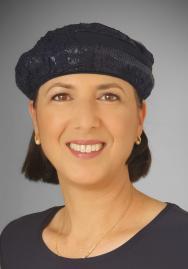
Shulamit Levenberg is an Israeli biomedical engineer, professor at the Technion – Israel Institute of Technology, and co-founder and chief scientific advisor of Aleph Farms, a cellular agriculture company that grows beef steaks directly from animal cells without slaughter.[17] Based in Haifa, Israel, she heads the Technion's Stem Cell and Tissue Engineering Laboratory and holds the Stanley and Sylvia Shirvan Chair in Cancer and Life Sciences.[16]
Levenberg trained in tissue engineering at MIT under Robert Langer, then spent two decades at the Technion developing vascularized 3D tissue constructs — work she has translated into three commercial ventures spanning cultivated meat, rapid antimicrobial diagnostics, and spinal cord regeneration therapy.[17] She has authored over 120 peer-reviewed publications with more than 16,400 citations and was elected a Fellow of both the National Academy of Inventors and the American Institute for Medical and Biological Engineering in 2023.[4][10]
Early life and education
Shulamit Levenberg was born in 1969 in Israel.[34] She completed her national service as a tour guide at a field school in Jerusalem before pursuing higher education.[11] She earned a BSc magna cum laude in biology from the Hebrew University of Jerusalem in 1992.[34]
Levenberg then entered a direct-track PhD program at the Weizmann Institute of Science, bypassing a separate master's degree. Her doctoral research, supervised by Professor Benjamin Geiger, focused on cell adhesion dynamics and signaling in molecular cell biology. She completed her PhD in 1999.[34][12]
Career
Massachusetts Institute of Technology – Robert Langer Lab (1999–2004)
Following her doctorate, Levenberg joined the laboratory of Professor Robert Langer at MIT as a postdoctoral research associate. During this period she developed foundational techniques for creating three-dimensional vascularized tissue constructs in vitro — the core technology that would later underpin both her medical research and her commercial ventures.[9][34] Her 2002 paper on deriving endothelial cells from human embryonic stem cells, published in the Proceedings of the National Academy of Sciences, has been cited over 1,300 times, and her 2005 Nature Biotechnology paper on engineering vascularized skeletal muscle tissue has been cited over 1,500 times.[4]
Technion – Israel Institute of Technology (2004–present)
Levenberg joined the Technion's Faculty of Biomedical Engineering in 2004, where she established the Stem Cell and Tissue Engineering Laboratory.[16] She was promoted to full professor in 2014 and served as Dean of the Faculty of Biomedical Engineering from approximately 2016 to 2020.[34][10] She also directs the Technion Center for 3D Bioprinting and the Rina and Avner Schneur Center for Diabetes Research.[16] In 2006, Scientific American named her one of the world's 50 leading scientists as a "Research Leader" in tissue engineering for her work on vascularization of engineered tissues.[34]
Her laboratory has served as the scientific origin point for all three of her commercial ventures. Doctoral students and collaborators in the lab developed the muscle tissue engineering techniques applied at Aleph Farms, the exosome-based therapies commercialized by NurExone Biologic, and the rapid diagnostics platform spun out as NanoSynex.[17] Levenberg has also served as President of the Israel Stem Cell Society and as a member of the Israel National Council for Bioethics.[34]
Harvard University – Wyss Institute for Biologically Inspired Engineering (2011–2012)
During a sabbatical year from the Technion, Levenberg served as a visiting professor at the Wyss Institute for Biologically Inspired Engineering at Harvard University.[34] She also received the Raine Visiting Professor Award for a subsequent summer sabbatical at the University of Western Australia.[34]
Aleph Farms (2017–present)
Levenberg co-founded Aleph Farms in 2017 with Didier Toubia, Dr. Neta Lavon, and The Kitchen Hub, a food-tech incubator operated by the Strauss Group.[17] The company originated from Levenberg's tissue engineering research at the Technion. As she later recounted, the idea took shape when her doctoral student Tom Ben-Arye proposed applying the lab's muscle tissue techniques to grow meat, and the team "decided to go for it."[10] When Toubia and The Kitchen Hub were searching for Israel's most advanced tissue engineering laboratory to build a cultivated meat company, they found Levenberg's group had already begun the work.[11]
Aleph Farms achieved a series of industry firsts: the world's first cultivated thin-cut steak in December 2018, the first meat cultivation experiment aboard the International Space Station in September 2019, and the first 3D bioprinted ribeye steak in February 2021, the latter produced in collaboration with the Technion.[12][30] The company's technology uses multiple cell types — muscle, fat, vascular, and connective tissue — cultivated on plant-based scaffolds in bioreactors, mimicking natural muscle-tissue regeneration.[29] All cultivated beef is derived from cells of a single Black Angus cow named Lucy.[15]
The company raised a $12 million Series A in 2019 led by VisVires New Protein with participation from Cargill, and a $105 million Series B in July 2021 led by L Catterton and DisruptAD, with investors including Leonardo DiCaprio.[16][17][21] Total funding across four rounds reached approximately $148 million, including a $29 million round in March 2025 led by Peregrine Ventures.[22][30] In January 2024, Aleph Farms became the first company in the world to receive regulatory approval from the Israeli Ministry of Health to sell cultivated whole-cut steaks commercially.[21][22] The company subsequently reduced its workforce from approximately 140 employees amid broader industry headwinds in the cultivated meat sector.[33][24]
NanoSynex (2017–2022)
NanoSynex was co-founded by Levenberg in 2017 as a Technion spinout focused on rapid antimicrobial susceptibility testing (AST).[25] The company's diagnostic platform, which originated in Levenberg's laboratory, aimed to reduce the time required for AST from 24–48 hours to approximately four to five hours, addressing the global challenge of antibiotic resistance.[25][26] In June 2022, Qualigen Therapeutics (NASDAQ: QLGN) acquired a 52.8% majority stake in NanoSynex, with a commitment of up to $10.4 million in milestone-based funding over three years.[25][25]
NurExone Biologic (2020–present)
Levenberg co-founded NurExone Biologic (formerly Neuroaxon) in 2020, a company developing exosome-based therapies for spinal cord injuries.[29] The technology originated from a collaboration between Levenberg's Technion laboratory and Professor Danny Offen at Tel Aviv University, beginning around 2015.[30] The company's lead product, ExoPTEN, uses engineered exosomes administered intranasally to promote nerve cell regeneration; in preclinical studies, the treatment restored mobility in 75% of rats with complete spinal cord transection.[29]
NurExone went public on the TSX Venture Exchange in June 2022 and also trades on the OTCQB and Frankfurt Stock Exchange.[31] The company has raised approximately $15 million since its founding and employs around 22 people, primarily in Haifa.[30] Levenberg serves as co-founder and chief scientific advisor, maintaining weekly involvement with the R&D team alongside her Technion position.[30]
KĀTAO Venture Platform
Levenberg serves on the advisory board of KĀTAO Venture Platform, contributing scientific expertise in tissue engineering and biomedical innovation.[33]
Public statements
We are still limited in our understanding about how to grow larger pieces of tissue or functional organs. If the two parallel approaches — the medical and the food industry — work on it together, there are more chances solutions will be found.
On the symbiosis between medical and food tissue engineering — NBC News, 2017[11]
We took exosomes and enhanced them in several ways to encourage nerve cell growth and repair. Via nasal administration, they reached the spinal cord. We saw that it worked, and it was very exciting. We were able to take rats, whose spinal cord was completely severed, and get them back on their feet.
On the NurExone spinal cord regeneration breakthrough — Haaretz, 2024[30]
These technologies require investment in research and development in academia. Companies are founded based on ideas that grew in academia, and if there are no budgets, researchers won't have a place to develop innovative thinking and we won't be able to be creative. Without the state recognizing and funding research, it's impossible.
On the role of public funding in deep-tech innovation — Calcalist Tech[10]
Personal life
Levenberg is based in Haifa, Israel, where the Technion is located.[16] She has spoken publicly about the importance of advancing women in scientific leadership, noting that "the natural inclination of managers is to promote those who work closely with them" and urging that leaders "keep their eyes open and recognize that there are other potential candidates, such as excellent women."[30]
Media appearances
References
- Aleph Farms to market first cultivated steaks — Globes, July 2021
- Prof. Shulamit Levenberg – Faculty of Biomedical Engineering, Technion — Technion
- Levenberg Shulamit – ICI Meeting — Innovations in Cardiovascular Interventions
- Shulamit Levenberg – Google Scholar — Google Scholar
- Prof. Shulamit Levenberg Nominated to NAI — American Technion Society, January 2023
- Levenberg Lab – Biosketch — Technion
- Faces behind EuroTech: Shulamit Levenberg, Technion — EuroTech Universities Alliance
- Shulamit Levenberg – AIChE — American Institute of Chemical Engineers
- The Tissue Challenge: Four scientists explain what happens when you combine biology, engineering, medicine, physics, and chemistry — Calcalist
- The Israeli researcher leading the way in cultured meat innovation — Calcalist Tech
- Lab-grown meat may save a lot more than farm animals' lives — NBC News, March 2017
- Aleph Farms Successfully Completed the First Slaughter-Free Meat Experiment in Space — Food Industry Executive, October 2019
- Aleph Farms and The Technion Reveal World's First Cultivated Ribeye Steak — Food Industry Executive, February 2021
- Technion professor shows what's 'at steak' in bioprinting muscle cells — Jerusalem Post, April 2022
- Aleph Farms redefines meat with a single cow named Lucy — The Jewish Chronicle
- Cultured Meat Startup Aleph Farms Raises $12m Series A from VisVires New Protein and Cargill — AgFunderNews, May 2019
- Israel's Aleph Farms Raises Whopping $105 Million For Cultured, Slaughter-Free Meat Rollout — NoCamels, July 2021
- DiCaprio Backs Lab-Grown Meat Startup — American Technion Society
- Aleph Farms Funding, Investors & Competitors — Multiples.vc
- Aleph Farms Accelerates Global Growth with $29M — Vegconomist, March 2025
- In world first, Israel approves cultured beef for sale to the public — Times of Israel, January 2024
- Aleph Farms' cultivated beef process receives blessing from Israeli government — TechCrunch, January 2024
- Aleph Farms raised $140 million—but now it's struggling to survive — Calcalist Tech, January 2024
- Cultivated-meat business Aleph Farms cuts jobs — Yahoo Finance / Just Food
- Startup Fights Superbugs, Antibiotic Resistance With Rapid Testing — NoCamels, July 2024
- NanoSynex – MIT Solve — MIT Solve
- Qualigen Acquires Majority Stake in NanoSynex — SEC / Qualigen Therapeutics, June 2022
- Qualigen Therapeutics Acquires Majority Stake in Infectious Disease Diagnostics Technology Company NanoSynex — GlobeNewswire, June 2022
- NurExone Announces Q4 and Full-year 2022 Financial Results — BioSpace, April 2023
- Scientists Giving New Hope to People With Spinal Cord Injuries — Haaretz, June 2024
- NurExone Biologic Inc. Announces Fourth Quarter and Full-Year 2025 Financial Results — BioSpace, April 2026
- Prof. Shulamit Levenberg – KĀTAO Advisory Board — KĀTAO
- Love Steak? This Lab-Grown Meat Startup Wants to Win You Over — Bloomberg, January 2022
- A conversation about cultivated meat — Nature Communications, December 2023