Overview
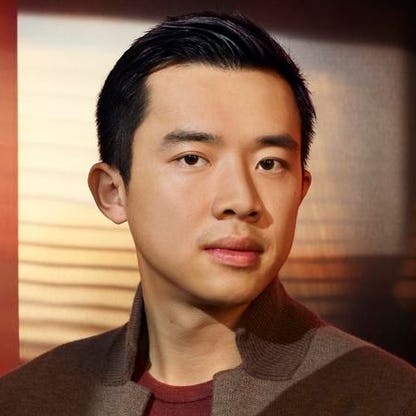
Jesse Zhang is an American entrepreneur and the co-founder and CEO of Decagon, a San Francisco-based artificial intelligence company that builds conversational AI agents for enterprise customer service. Under Zhang's leadership, Decagon has raised approximately $481 million in venture capital across five rounds and reached a valuation of $4.5 billion as of January 2026.[1][4]
Before Decagon, Zhang founded Lowkey, a social gaming clip-sharing platform backed by Y Combinator and Andreessen Horowitz, which was acquired by Niantic in December 2021.[3] A product of Boulder, Colorado's competitive math community, Zhang graduated from Harvard University with a degree in computer science in three years and held internships at Google, Hudson River Trading, and Citadel Securities before founding his first company at age 21.[4][5]
Early life and education
Jesse Zhang was born approximately 1997 and raised in Boulder, Colorado, in a Chinese immigrant family.[6] He attended Fairview High School, where he became deeply involved in mathematics competitions. Zhang qualified twice for the USA Mathematical Olympiad Program (MOP) — a summer training camp for the top approximately 50 math students in the country — and competed in the USA Computing Olympiad (USACO).[7][24] He was a finalist in the 2015 Intel Science Talent Search and a participant in the Research Science Institute (RSI) at MIT.[9]
Zhang enrolled at Harvard University to study computer science and completed his degree in three years, graduating in 2019 — one year ahead of schedule. He has said he felt "there was no time to waste" and that traditional coursework was not fully aligned with his goals as a founder.[4] During his time at Harvard, Zhang completed internships at Google, Hudson River Trading, Citadel Securities, Intel, Kensho, and EDO, gaining exposure to both large-scale software engineering and quantitative finance.[5][7]
Career
Google (2016)
Zhang interned at Google as a software engineer during his undergraduate years at Harvard, gaining early exposure to large-scale technology systems.[5] The internship was one of several elite placements he completed while studying computer science, alongside roles in quantitative finance.[7]
Hudson River Trading (2016)
Zhang was part of Hudson River Trading's first-ever intern class of ten in 2016. The cohort included Alexandr Wang (later founder of Scale AI), Scott Wu (later founder of Cognition), and Jeffrey Yan (later founder of Hyperliquid). Zhang has noted that some of these colleagues were friends from as far back as sixth grade, reflecting the tight-knit competitive math community he came from in Boulder.[7][24]
Citadel Securities (2017)
Zhang interned at Citadel Securities during his time at Harvard, working in quantitative trading. The role, alongside his Hudson River Trading internship, reinforced his mathematical and analytical background before he pivoted to founding startups.[5]
Lowkey (2018–2021)
After graduating from Harvard a year early in 2019, Zhang founded Lowkey (originally called Camelot), a social gaming clip-sharing platform that allowed PC gamers to automatically capture, edit, and share short video recordings of their gameplay. Zhang co-founded the company with Melissa Yu and Matthew Huang, though both co-founders departed due to burnout at approximately the 18-month mark, leaving Zhang to run the company solo for the remaining years.[10][7]
Lowkey was accepted into Y Combinator's Summer 2018 batch and raised a $7 million Series A led by Andreessen Horowitz in March 2021, with angel investors including Zach Perret and Dylan Field.[20] In December 2021, Niantic — the augmented reality company behind Pokémon GO — acquired Lowkey to accelerate social experiences within its products. The acquisition was reported as a mid-eight-figure transaction.[3][4] Zhang later described Lowkey as a formative but humbling experience, noting: "Things didn't go as planned. We chased the wrong ideas. We went on wild goose chases based on our assumptions instead of customer feedback."[7]
Niantic (2022–2023)
Following the Lowkey acquisition, Zhang joined Niantic's Social team at the company's Ferry Building office in San Francisco, working on social features for Niantic's augmented reality products including Pokémon GO.[3][24] During this period, he met Ivan Zhou, then head of product at Niantic, who later became an Accel partner and led Decagon's Series A investment.[10] Zhang departed Niantic in 2023 to co-found Decagon.[4]
Angel Investing and Sequoia Scouts (2022–present)
During his time at Niantic, Zhang began angel investing through the Sequoia Scouts program and Neo, a startup accelerator. He has made more than 20 angel investments, with a portfolio that includes Pika (AI video generation), Cursor (AI coding), Cognition (co-founded by his former HRT intern classmate Scott Wu), Visual Electric, Moment, Motion, Verse, and Succinct.[24][7]
Decagon (2023–present)
Zhang co-founded Decagon in August 2023 with Ashwin Sreenivas, whom he met at an Andreessen Horowitz founder event in Utah in May 2023. The two bonded over their shared backgrounds in math olympiads and their prior startup exits — Sreenivas had previously founded Helia, which was acquired by Scale AI.[24][7] Rather than starting with a fixed product idea, Zhang and Sreenivas spent approximately a month conducting intensive customer discovery, speaking with roughly 100 companies to identify the problem best suited to AI. Enterprise customer service emerged as the clearest opportunity: companies could quantify specific dollar savings, the total addressable market was large, and buyers were willing to sign six-figure contracts before the product was fully built.[12][13]
Decagon emerged from stealth in June 2024 with a combined $35 million in seed and Series A funding led by Accel, with participation from Andreessen Horowitz, A*, and Elad Gil.[5][3] The company's platform deploys conversational AI agents across chat, email, voice, and SMS, trained on a company's knowledge base and historical support conversations. A key technical differentiator is its Agent Operating Procedures (AOPs) framework, which gives enterprises fine-grained control over agent behavior, escalation logic, and guardrails — addressing what Zhang described as the "black box" concern that had made large companies hesitant to adopt AI in customer experience.[24][5]
Growth was rapid. Zhang and Sreenivas reached $1 million in annualized revenue with no other employees — just the two co-founders.[13] Decagon reached eight-figure annualized revenue within 18 months of founding and grew from 12 to over 200 employees in the same period.[15][9] Subsequent funding rounds came in rapid succession: a $65 million Series B led by Bain Capital Ventures in October 2024 at a $650 million valuation[17]; a $131 million Series C co-led by Andreessen Horowitz and Accel in June 2025 at a $1.5 billion valuation, which was five times oversubscribed[18]; and a $250 million Series D led by Coatue Management and Index Ventures in January 2026, tripling the valuation to $4.5 billion.[1] Total funding reached approximately $481 million across five priced rounds.[4]
As of late 2026, Decagon has approximately 500 employees and offices in San Francisco, New York City, and London.[6] Customers include Hertz, Duolingo, Notion, Chime, Rippling, Substack, Eventbrite, Avis Budget Group, Block, Deutsche Telekom, Delta Air Lines, and PayPal.[1] The company reports that its AI agents achieve 70–80% ticket deflection rates; Chime reported over 60% reduction in contact-center costs and a doubled Net Promoter Score.[9][12] Approximately 90% of Decagon's agent workloads run on fine-tuned open-source models.[19] In March 2026, the company completed its first employee tender offer at the $4.5 billion valuation, providing liquidity to more than 300 employees.[4] Business Insider reported in 2026 that Decagon had held preliminary M&A discussions with ServiceNow and hired an investment bank to evaluate acquisition interest, though no deal was announced; ServiceNow denied the reports.[20][12]
Public statements
What's there to be intimidated about? We like competing. We enjoy winning.
On competing against larger customer service companies — Forbes, 2025[4]
Whenever there's a big technology shift — in this case with AI — it just opens the door for a lot of companies. But really, the number of great ideas is usually pretty small. Your job as a founder is to try to figure out what those are, ideally at the beginning of the cycle.
On identifying the right AI opportunity — Forbes, 2026[22]
When we first started, the prevailing advice we received was to not pursue the customer support space, because it was too crowded. Ultimately, the thing that worked for us was to aggressively prioritize what customers wanted and maintain laser focus on what customers would get value from. That's the difference between a real business and a flashy AI demo.
On Decagon's contrarian founding thesis — TechCrunch, 2024[5]
Personal life
Zhang was born and raised in Boulder, Colorado, in a Chinese immigrant family. He has described his upbringing as shaped by intense academic discipline and early immersion in competitive mathematics, which introduced him to a network of peers who later became prominent technology founders.[6][7] He resides in San Francisco, California, where Decagon operates with a five-days-a-week in-office culture.[23]
Media appearances
References
- Decagon's Valuation Triples to $4.5 Billion as it Ushers in the Age of AI Concierge — BusinessWire, January 2026
- Decagon funding: Every round, investor, and valuation (2026) — Revenue Memo
- Niantic buys gameplay recording app Lowkey to improve its in-game social experience — Engadget, December 2021
- This 28-Year-Old AI Founder Thinks His Customer Service Startup Can Beat Out Companies 10x His Size — Forbes, December 2025
- Decagon claims its customer service bots are smarter than average — TechCrunch, June 2024
- The High Flyers Podcast EP #265: Jesse Zhang – CEO & Co-Founder, Decagon — The High Flyers Podcast / Curiosity Centre
- Building Decagon – Invest Like the Best with Patrick O'Shaughnessy — Colossus / Invest Like the Best, October 2025
- Decagon Business Breakdown & Founding Story — Contrary Research
- Meet 19 Society alumni named to the 2026 Forbes 30 Under 30 List — Society for Science, December 2025
- Decagon's Jesse Zhang: To Win in Agentic AI, Focus on Your Customer — Accel
- Lowkey – Dealroom Company Profile — Dealroom
- Reinventing Commerce with Decagon CEO Jesse Zhang – No Priors Podcast — No Priors (Elad Gil & Sarah Guo)
- Jesse Zhang on Grit: 'Six customers, a million in revenue' — Scuttlebutt / Substack
- Decagon launches with $35m raised from Accel and a16z — Decagon, June 2024
- From Zero to Eight Figures in 18 Months: Decagon CEO's Playbook for AI-Native SaaS Growth — SaaStr / Substack
- First Block with Jesse Zhang, Co-founder and CEO of Decagon — Notion, November 2025
- Decagon raises $65m Series B led by Bain Capital Ventures — Decagon, October 2024
- Decagon Raises $131M at $1.5B Valuation — BusinessWire, June 2025
- Decagon runs 90% of its agents on open-source models — Dealroom
- AI agent company Decagon held early M&A talks with ServiceNow, others — Business Insider (via Biztoc)
- ServiceNow Denies Reports of Takeover Interest in AI Agent Startup Decagon — PYMNTS
- AI Agent Startup Decagon Triples Valuation To $4.5 Billion — Forbes, February 2026
- No Priors: AI Agents Talking to AI Agents – Reinventing Commerce with Decagon CEO Jesse Zhang (transcript) — Podscripts / No Priors
- Decagon CEO & Co-Founder, Jesse Zhang: Competing with Brett Taylor and Sierra — The Twenty Minute VC
- Decagon's Jesse Zhang On Sales Battles, AI 'Wrapper' Revenge, And Making Agents Work — Upstarts Media
- Jesse Zhang – Web Summit Lisbon 2025 Speaker — Web Summit, November 2025