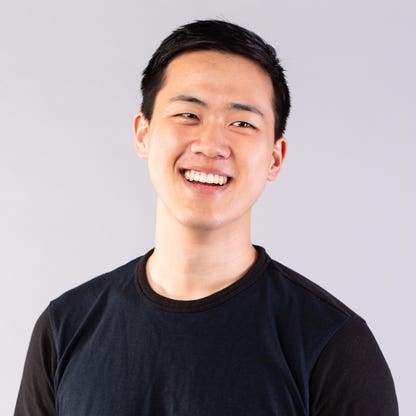
Overview
Andy Fang is a Taiwanese-American entrepreneur and software engineer who co-founded DoorDash, the on-demand delivery platform, in 2013 while an undergraduate at Stanford University.[3] He served as the company's chief technology officer from its founding through 2019 and subsequently became head of consumer engineering, overseeing the platform's consumer-facing product and technology architecture.[1] DoorDash went public on the New York Stock Exchange in December 2020, raising $3.37 billion; the IPO valued the company at more than $60 billion on a fully diluted basis and made Fang a billionaire.[5][18]
Fang co-founded DoorDash with Tony Xu, Stanley Tang, and Evan Moore as a class project at Stanford, initially launching the service as PaloAltoDelivery.com.[4] In the company's earliest days, Fang wrote all of the code and personally made the first several hundred deliveries alongside his co-founders.[2] The company was accepted into Y Combinator's Summer 2013 batch and raised a $2.4 million seed round later that year.[3][19] DoorDash has since grown into one of the largest on-demand delivery companies in the world, reporting $13.7 billion in revenue and 31,400 employees in 2025, and debuting on the Fortune 500 in 2024 at No. 443.[5]
Fang has remained a central figure in DoorDash's technical direction for more than a decade. He has led the company's expansion into autonomous delivery, including the development of the Dot ground delivery robot, and its AI-powered ordering tools, including the Ask DoorDash natural-language interface and a text-to-order agent integrated with Apple Messages.[13][10] He continues to personally make DoorDash deliveries at least once a month as part of WeDash, the company-wide program he helped create that requires all salaried employees to complete deliveries.[2][7]
Early life and education
Andy Fang was born in 1992 in San Jose, California, to Taiwanese immigrant parents.[20] He grew up in the San Francisco Bay Area as one of four children.[1] His first exposure to programming came at age nine, when his mother enrolled his brother in a summer coding camp; Fang tagged along with nothing else to do and was the one who took to it.[20]
Fang attended The Harker School, a private K–12 school in San Jose, where he served as student body president and took an advanced computer science course covering neural networks.[20] His computer science teacher, Eric Nelson, who taught him for three consecutive years, later recalled pushing Fang to apply himself fully even on simple assignments.[20] Fang graduated from Harker in 2010.[20]
He enrolled at Stanford University to study computer science, despite initial reluctance to attend a school so close to home.[20] As a freshman, he was roommates with Stanley Tang; the two built a social calendar app together before either had conceived of DoorDash.[20] During his undergraduate years, Fang served as a section leader for CS106, Stanford's introductory programming sequence, and completed two summer software engineering internships at Facebook (now Meta) in 2011 and 2012.[20] He earned a bachelor of science in computer science from Stanford in 2014, having already co-founded DoorDash during his junior year.[4][20]
Career
Facebook Internships (2011–2012)
While an undergraduate at Stanford, Fang completed two summer software engineering internships at Facebook, in 2011 and 2012.[20] He interned alongside Tang, his freshman-year roommate and future DoorDash co-founder.[20] The internships gave Fang hands-on experience building consumer technology at scale, work that would directly inform his engineering approach at DoorDash.[20]
DoorDash — Founding and Early Growth (2013–2015)
In January 2013, Tony Xu and Evan Moore — MBA students working on a project in Stanford's Startup Garage entrepreneurship course — approached Fang for technical help.[4] Fang recruited Tang, and the four built a working prototype called PaloAltoDelivery.com in a single day.[4][9] The insight was simple: most local restaurants in Palo Alto had no delivery capability.[3] Within 30 minutes of launching the site, the team received its first order.[4]
Fang wrote all of the company's code from the Stanford dorm room and, alongside his co-founders, personally fulfilled the first several hundred deliveries.[2] "We had to. There was nobody else to do them," Fang told the Associated Press in 2023. "But what we quickly found out was that by doing these deliveries ourselves, we learned a ton of insights into what it actually took to get these deliveries fulfilled."[2]
DoorDash was accepted into Y Combinator's Summer 2013 batch, receiving $120,000 in seed funding for a 7% equity stake.[19] The company incorporated as DoorDash in June 2013 and raised a $2.4 million seed round led by Khosla Ventures' Keith Rabois and Charles River Ventures' Saar Gur.[3][15] At the time of the seed round, DoorDash was delivering from approximately 70 restaurants in Palo Alto and Mountain View.[3] Fang framed the competitive landscape in terms of market creation rather than rivalry: "DoorDash's biggest competitor isn't another food delivery startup, but non-consumption — potential customers who don't know about DoorDash and are just cooking or ordering pizza."[3]
By late 2015, DoorDash had raised a $17.3 million Series A and a $40 million Series B, and Wired profiled the company's ambition to "own the last mile" of local logistics.[14] Fang served as CTO throughout this period, responsible for the platform's overall product vision, technology roadmap, and architectural direction.[1]
DoorDash — Scaling and IPO (2016–2020)
DoorDash raised a series of increasingly large funding rounds between 2016 and 2020: a $127 million Series C in 2016, a $535 million Series D led by SoftBank in 2018, a $250 million Series E later that year, a $400 million Series F in 2019, and a $400 million Series H at a $16 billion valuation in 2020.[18][5] Total pre-IPO funding exceeded $2.5 billion from investors including Sequoia Capital, Kleiner Perkins, and GIC.[18]
In February 2019, Fang transitioned from CTO to head of consumer engineering, leading the team responsible for DoorDash's consumer-facing products.[1] DoorDash went public on the NYSE on December 9, 2020, under the ticker DASH.[5] The IPO raised $3.37 billion, and shares opened at $182 — 86% above the offering price — giving the company a fully diluted valuation exceeding $60 billion.[5] Fang held a 4.7% stake at the time of the offering, making him a billionaire.[18][5] TechCrunch listed DoorDash among the most successful companies to emerge from Y Combinator.[19]
DoorDash — Post-IPO and AI Strategy (2021–present)
After the IPO, Fang continued to lead DoorDash's consumer engineering organization. By 2022, the company had more than six million independent contractor drivers and fulfilled 1.7 billion orders worldwide.[1] DoorDash made its Fortune 500 debut in 2024 at No. 443, and reported $13.7 billion in revenue and $935 million in net income for 2025.[5]
Fang has been a central figure in DoorDash's push into artificial intelligence and autonomous delivery. The company began investing in autonomous delivery in 2018, initially exploring partnerships with sidewalk robot companies and robo-taxi operators before concluding that neither fit the three-to-five-mile suburban delivery profile and building its own robot, Dot, in-house.[14] Dot — a 300-pound, 20-mph Level 4 autonomous vehicle — has been operating in Phoenix since approximately 2024.[10]
In December 2025, DoorDash launched Zesty, an AI-powered social app for restaurant discovery.[17] In June 2026, the company introduced Ask DoorDash, a natural-language ordering interface embedded in the DoorDash app.[10] At the Groceryshop conference in September 2026, Fang presented early metrics: Ask DoorDash users produced baskets approximately 50% larger than non-AI orders, checked out five times faster, and purchased 60% more unique items.[10][12] In July 2026, DoorDash released a command-line interface tool designed for AI agents to programmatically place orders.[16]
On September 30, 2026, Bloomberg reported that DoorDash had unveiled a text-to-order AI agent integrated with Apple Messages, piloted with 20,000 users.[13] Fang presented the product at DoorDash's Dash Forward event in San Francisco.[13]
WeDash Program (2015–present)
In 2015, Fang and his co-founders formalized the practice of making deliveries into WeDash, a company-wide program requiring all salaried DoorDash employees in the United States, Canada, and Australia to complete at least four deliveries per year.[2][7] Employees are permitted to use work time for the shifts and keep any earnings.[2] Fang himself continues to make deliveries for at least one hour each month, sometimes alongside co-founders Xu and Tang.[1][7]
In June 2023, an Associated Press video journalist accompanied Fang on a delivery shift in San Francisco, during which he earned $15.50 for 51 minutes of work — below the $17.97 average hourly rate for San Francisco DoorDash drivers at the time, according to Indeed.[2][1] The AP reported that Fang discovered a wrong restaurant address in the app during the shift and flagged it for correction, illustrating the program's function as a product-quality mechanism.[2] "We just want to make sure that people who are working here, who are supporting our audiences, are understanding what people are going through," Fang told the South China Morning Post.[7]
Recognition and philanthropy
In 2015, Fang and co-founder Stanley Tang were named to the Forbes 30 Under 30 list in the Consumer Technology category.[20] In 2020, Fang, Xu, and Tang were recognized on Gold House's A100 list of the most impactful Asian and Pacific Islander Americans.[20] In 2025, Fast Company named DoorDash Labs the Innovation Team of the Year.[17]
In April 2021, Fang donated $10 million to The Harker School to establish the Alumni Scholarship Endowment Fund, providing need-based financial aid to students who qualify for admission but cannot afford tuition.[20] The gift was the largest in the school's history at the time.[20] "A great education is one of the best ways to even the playing field for underprivileged kids," Fang said in announcing the donation. "I hope this endowment can help families from underserved communities achieve the American dream."[20]
Media appearances
Public statements
We had to. There was nobody else to do them. But what we quickly found out was that by doing these deliveries ourselves, we learned a ton of insights into what it actually took to get these deliveries fulfilled.
On making the first DoorDash deliveries — Associated Press, 2023[2]
We just want to make sure that people who are working here, who are supporting our audiences, are understanding what people are going through.
On the WeDash program — South China Morning Post, 2023[7]
There's still a lot for us to accomplish at DoorDash. Our vision from day one was always to build a last-mile logistics platform to service any local commerce use case.
On DoorDash's long-term vision — Harker Magazine, 2021[20]
DoorDash's biggest competitor isn't another food delivery startup, but non-consumption — potential customers who don't know about DoorDash and are just cooking or ordering pizza.
On the competitive landscape — TechCrunch, 2013[3]
Personal life
References
- Your DoorDash driver may be the company's co-founder — NBC New York / Associated Press, June 2023
- Your DoorDash driver? He's the company's co-founder — Associated Press, June 2023
- DoorDash Raises $2.4M To Improve Food Delivery — TechCrunch, September 2013
- Y Combinator-Backed DoorDash Delivers Food Quickly In South Bay — TechCrunch, July 2013
- DoorDash IPO turns CEO Tony Xu, co-founders Andy Fang, Stanley Tang into billionaires — Fox Business, December 2020
- Your DoorDash driver? He's the company's co-founder — AP / Barchart, June 2023
- Why DoorDash's billionaire co-founder delivers food orders to customers — South China Morning Post, July 2023
- DoorDash Raises $2.4M To Improve Food Delivery — TechCrunch, May 2013
- Y Combinator-Backed DoorDash Delivers Food Quickly In South Palo Alto — TechCrunch, July 2013
- 5 takeaways from Groceryshop — Grocery Dive, September 2026
- Instacart and DoorDash wrestle with online grocery's growing affordability problem — Grocery Dive, September 2026
- Groceryshop Wrapup: Grocery Leaning On AI As Shoppers Get Pickier — The Shelby Report, September 2026
- DoorDash Debuts Text-to-Order AI Agent That Works in Apple Messages — Bloomberg, September 2026
- DoorDash Wants to Own the Last Mile — Wired, November 2015
- DoorDash Raises $2.4M To Improve Food Delivery — TechCrunch, September 2013
- Yes, you can now order DoorDash from the command line — TechCrunch, July 2026
- DoorDash rolls out Zesty, an AI social app for discovering new restaurants — TechCrunch, December 2025
- The VC and founder winners of DoorDash's IPO — TechCrunch, November 2020
- These are the most successful companies to emerge from Y Combinator — TechCrunch, October 2018
- Dashing through life: DoorDash founder Andy Fang '10 – an alumni profile from Harker Magazine — Harker Magazine / The Harker School